

Distinguished Creative Co. · Sacramento
Are you showing upwhere people are looking?
Someone near you is asking an assistant tonight whether there is a church for someone like them. Put in your church website to check how clearly it explains who you are, where you meet and how to visit, with a score and what to fix first.

The person you're missing
Their first visit starts on your website.
Picture someone on a Saturday night who has not been to a church in years, or ever. Something has happened. A death, a marriage coming apart, a kid in trouble, or just a quiet sense that they cannot keep doing this alone.
They are not looking for your statement of faith. They are looking for four plain things, and if they cannot answer all four in about thirty seconds they close the tab. Not because they decided against you. Because deciding took too long and the courage ran out.
Here is the part that should bother all of us. You never find out. There is no bounce notification for the person who almost came. Sunday looks the same either way, so nobody goes looking for the problem.
Four questions. A clearer welcome.
Design concept · AI-generated imagery

You’re welcome here
Service times
- Day of the week
- Time of each service
- What time to arrive
A clear time to arrive.
Your service days and times, visible before someone has to open a menu.
You’re welcome here
Find your way
- Your street address
- Directions in one tap
- Where to park
One less thing to figure out.
Your address, directions and parking information together in one place.
You’re welcome here
Your first visit
- What people wear
- How the service feels
- How long it lasts
A little familiarity before Sunday.
Show the experience honestly so someone can picture walking through the door.

You’re welcome here
Coming with kids?
- Where children go
- Who will be with them
- Check-in and collection
Help parents feel prepared.
Explain the children’s experience, check-in and collection before a family arrives.
Most church websites answer none of those in the first screen. Not from neglect. They were built by people who already know the answers, for people who already know the answers.
Where people are looking
They ask an assistant before they ask anyone.
An illustrative search journey
“Is there a church near me for someone like me?”
- 01Someone asks.
In their own words.
- 02Your church is understood.
Who you are. Where you meet.
- 03A next step is clear.
What to expect when they visit.
Love it or hate it, people are taking their questions about God, meaning and forgiveness to an assistant. Quietly, at night, in words they would not say out loud yet. Often long before they would walk into a building to ask anyone.
Barna and Glooput numbers on it in November 2025. Nearly one in three American adults said spiritual advice from AI is as trustworthy as advice from a pastor. Among Gen Z and Millennials it was two in five.
Pewmeasured the scale in February 2026. About half of US adults now use AI chatbots, and one in ten go to them for emotional support or advice.Under thirty, it is one in five.
Whatever you make of that, it is where the questions are going. And some of those conversations end exactly where you would want them to end. With a question like, is there a church near me for someone like me.
The practical ones run through the same door. "Churches near me with a Saturday service." "Somewhere with childcare in Elk Grove." "A church that isn't huge."
Something answers all of it. It reads websites and Google listings to decide who to name. If yours does not plainly say who you are, when you meet and where, it names a different church. You never find out the question was asked, or that it was about someone who was finally ready.
Why this matters
A good website is not just a tool. It is a ministry in itself.
It is the first thing a searching person meets, and often the only thing they meet before deciding whether to come. It either helps them find a place where they could encounter Jesus, or it quietly hands them a reason to stop looking.
So this was never really about a website. It is about the person on the other end of that search, looking for help, and whether they find hope through a local church that can point them to Jesus.
That is why this work matters to me. I want more people to encounter Jesus through the local church, and being findable is not a small part of that. It is the part almost nobody is tending.
What you get
A real site, built by hand, in about three weeks.
A place to begin
You don’t have to have it all figured out.
Meet the people. Know what to expect. Find your next step.
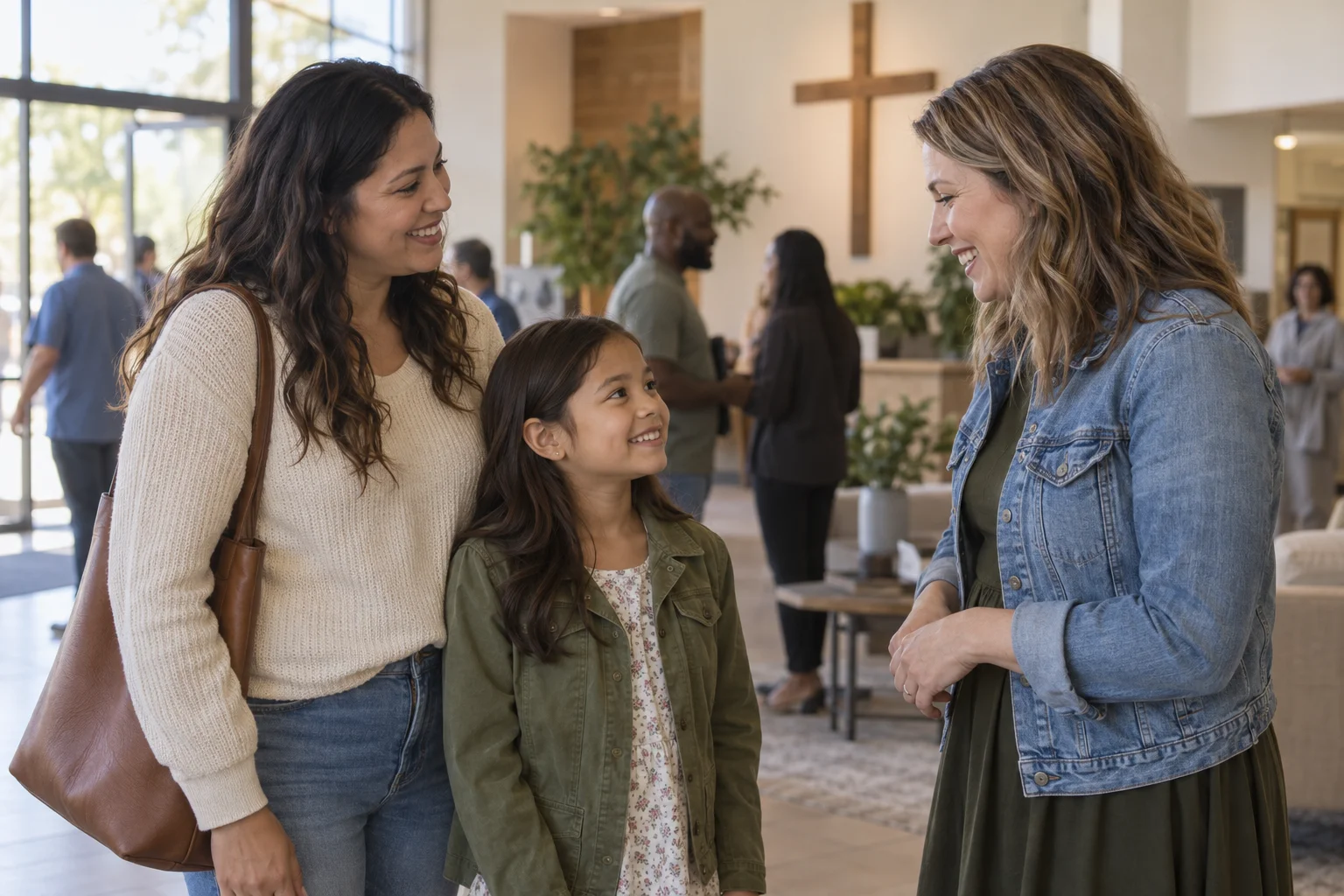
We talk first, and I learn how your church actually works before I build anything. Then I build it. One person, no templates, no offshore team, and nothing dropped in from a theme with your logo swapped on top.
Service times and directions where a stranger finds them in seconds. A page that tells a first-time visitor what to expect before they walk in. Your ministries and your next steps. And the behind-the-scenes details that let Google and AI tools understand what you are and where, which is the part almost nobody does for churches.
Three weeks from our call to live, in most cases. You own the domain, the content and the site at the end.
What it costs
Priced so a board can say yes.
Talk about your church ↗$500–$1,200to build it.
Depending on scope and scale. One campus and a handful of pages sits low. Several campuses, many ministries or a big sermon archive sits higher. I tell you which before you commit.
$125 a month from launch.
Hosting, support and your changes. Service time changed, new staff member, a new page, something that needs fixing, it is handled.
The site is yours.
You own the domain, the content and the site. If you would rather take it over yourselves, you can.
I do this for ministries as a ministry. That is why the price is a fraction of what I charge a business for the same work, and why the level of care is identical. Not a discount I am running, and not a lesser version of the build. The next part is why.
Why the price is the price
The business exists to pay for this part.
The local business side of Distinguished Creative Co. is what lets me serve without needing a salary from a church, and without a church needing to find room in a budget for me. That is the whole arrangement, and it is why the two prices look the way they do on each side.
A church paying me well would mean less going where it should. I would rather build the thing, keep it running, and have the money stay in the ministry.
Why me for this
I have been on your side of this.

Eighteen years of ministry, in both paid and volunteer positions. I have served in just about every area of a church except singing, which everyone involved is grateful for. I led the media and production team, served in high level leadership, and I have pastored. I still lead a large ministry at my own church today.
So I have sat in the meeting where the website gets argued about. I know what it is to need a service time changed on a Thursday and have nobody to call. I know the gap between what a church says it wants on the site and what actually helps the person who has never walked in.
I have also built a digital outreach system of my own and taught it to pastors. One of them, a bivocational pastor in a small community, reached 1,122 accounts in a month, and 67.8% of them were people who did not already follow the church. And I ran the Meta ads behind local church outreaches that drew 800 to 1,500 people. More than once.
That is not work I take on for churches now, and it is not what this page is selling. I bring it up for one reason. Getting a church seen by people who do not know it exists is the same problem your website has to solve, and I have solved it when the room actually had to fill.
That is the difference between hiring someone who builds church websites and hiring someone who has done the work the website is supposed to support.
Questions
Why is this so much less than you charge a business?
Because a business is buying growth and a church is not. I would rather the money stay in the ministry. The business side of what I do is what makes that possible, so the two prices are connected on purpose.
What does the $500 to $1,200 actually cover?
A real site, built by hand for your church. Service times, location and directions where a stranger will find them in seconds, a page that tells a first-time visitor what to expect, your ministries and next steps, and the behind-the-scenes details that let Google and AI tools understand who you are and where. Not a template with your logo dropped in.
What decides whether we are at $500 or $1,200?
Scope and scale. One campus with a handful of pages sits at the low end. Multiple campuses, a lot of ministries, a big sermon archive or anything that needs custom building moves it up. I will tell you which end you are at on the first call, before you commit to anything.
What does the $125 a month cover?
Hosting, support and your changes, starting the day your site goes live. Service times change, a new staff member starts, you need a new page or something fixed, and it is handled. If you would rather take it over yourselves, you can. The site is yours either way.
Who owns the site?
You do. The domain, the content and the site itself. You are never locked into me to change a service time, and you can walk away with all of it.
Do you only work with churches?
No. Most of what I build is for local businesses. I build for churches because it is the work I actually care about most, and the business side is what lets me price it this way.
See what a first-time visitor sees.
No email, no call, no pitch. Just your score and the first things worth fixing.
Or book a call and we'll talk about what your church actually needs.